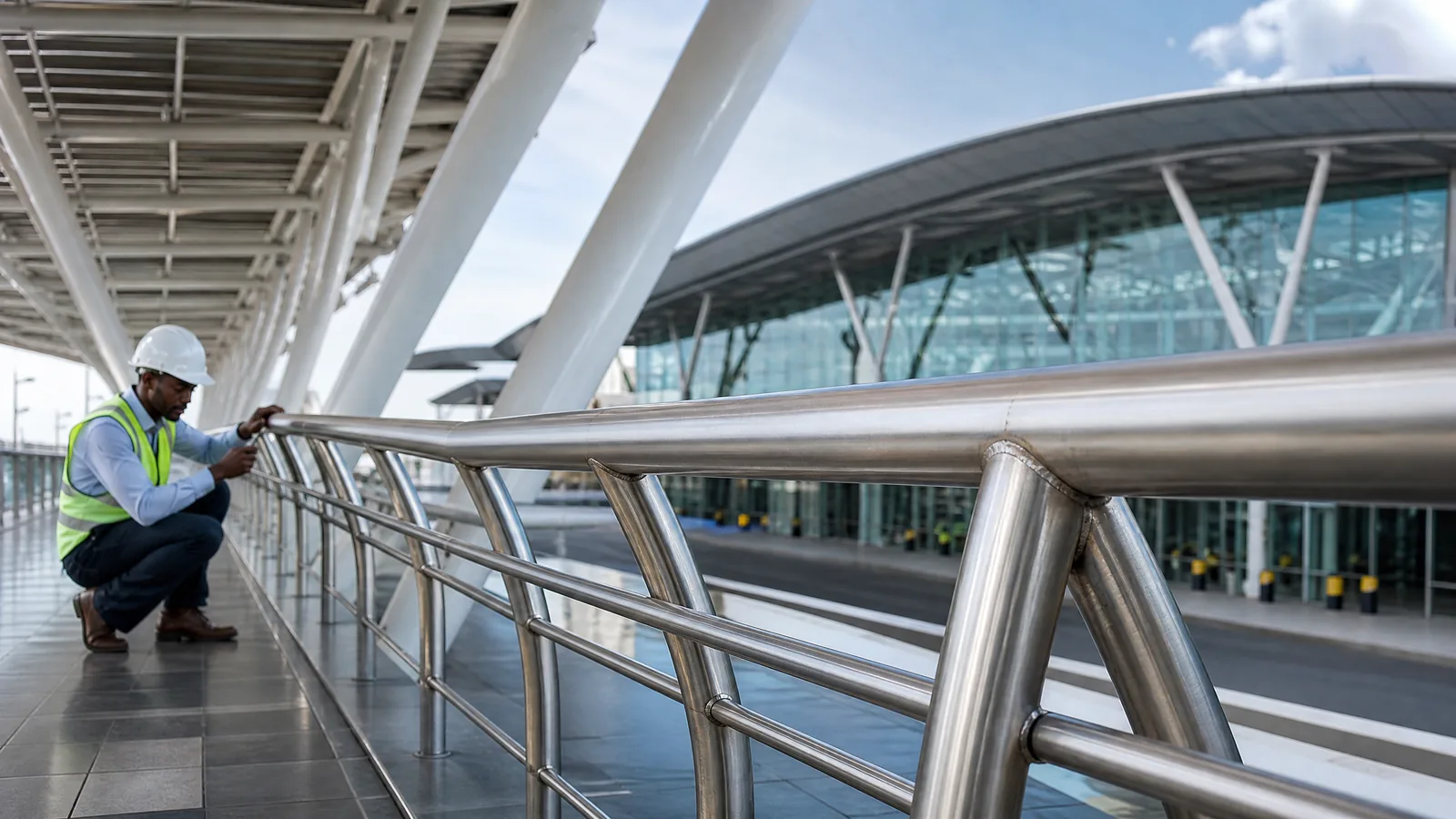
For African infrastructure, specify stainless steel tubes by matching environment and load to profile, grade and wall thickness; define finish and fabrication needs; reference recognized standards; and require clear inspection and documentation. The sections below provide a practical worksheet, RFQ checklist and sourcing tips.
Key selection factors for African infrastructure
Stainless steel tubes are chosen across African water, transport, commercial and industrial projects for durability, hygiene and lifecycle value. To reach the right specification quickly, align these factors before tendering:
- Application and service environment (potable water, facade, transport hub, process line).
- Profile and geometry (round, square, rectangular, oval; diameter/side and thickness).
- Alloy grade and corrosion category (urban, inland, coastal, high-chloride, sanitation).
- Surface finish and aesthetic performance (brushed, mirror, colored, textured).
- Fabrication and installation needs (bending, welding, perforation, cut-to-length).
- Standards and documentation (dimensional, grade, finish, quality system).
WJH Stainless Steel, founded in 1996 with ISO 9001, ISO 14001 and ISO 45001 certifications, supports one-stop supply from tubes to custom fabrication for architectural and industrial projects. See our tube range at stainless steel tubes.
Profiles, dimensions and wall thickness
Profile and wall selection drives both appearance and performance. Round tubes dominate for fluid handling and structural members; square and rectangular sections serve handrails, frames and facade grids; oval profiles bring streamlined aesthetics to transport and public spaces.
Wall thickness and load considerations
Choose thickness according to span, connection type, crowd loads and exposure. Thicker walls increase resistance to denting and allow deeper post-fabrication polishing. For concealed piping, coordinate thickness with internal pressure, jointing method and corrosion allowance defined by the project engineer.
Lengths, tolerances and ends
Define mill or cut lengths and overall tolerance class early to control site waste. Specify end condition (plain, deburred, chamfered, capped) for installation efficiency and safety.
Tube specification worksheet
| Field | Your requirement | Notes |
|---|---|---|
| Application / Location | e.g., coastal facade balustrade, potable water header, airport handrail | |
| Profile | Round / Square / Rectangular / Oval | |
| Outside size | OD for round; side A x side B for rectangular | |
| Wall thickness | Match load, span and joining method | |
| Grade | See grade guidance and compare options | |
| Surface finish | Hairline/No.4, mirror 8K, PVD color, etched/embossed | |
| Length & tolerances | Mill length or cut-to-length; dimensional class | |
| Welded or seamless | Based on pressure, hygiene or aesthetic needs | |
| Fabrication | Cutting, bending, welding, perforation, pre-assembly | |
| Accessories | End caps, brackets, flanges, glass clamps | |
| Packaging | Protective film, end caps, export crates | |
| Inspection scope | Dimensional, weld seam, finish, documentation review | |
| Destination port | State preferred transit hub and delivery terms |
Grades for varied African environments
Selecting a stainless steel grade depends on exposure and hygiene requirements. Urban inland projects often face pollution and intermittent cleaning; coastal regions introduce chloride from sea spray; water and food-related systems prioritize cleanability.
- Urban/public architecture: Choose grades with reliable corrosion resistance for rain-exposed handrails, facade grids and transit fittings. Design in drip edges and avoid crevices.
- Coastal or high-chloride exposure: Increase alloy resistance and specify enhanced surface finish quality to reduce tea-staining risk; plan for routine washing.
- Potable water and process hygiene: Favor grades with established use in sanitation and easy-to-clean finishes; ensure welds are properly finished.
For side-by-side alloy characteristics, see our stainless steel grade comparison. For wider background on stainless selection, consult World Stainless resources.
Finishes and fabrication options
Finish choice affects both appearance and cleanability. Brushed hairline/No.4 surfaces suit high-traffic interiors and diffuse light; mirror-polished 8K provides premium reflectivity for signature spaces; PVD color coating provides metallic color options through vacuum deposition. Textured sheets can be matched to tubular elements for cohesive design language.
- Hairline/No.4: Linear grain for elevators, retail fronts and public handrails. See hairline stainless steel.
- Mirror 8K: High-reflectivity surfaces for feature elements and wayfinding. Explore mirror 8K stainless steel.
- PVD color: Stable color spectrum for branding and anti-fingerprint options. Learn more at PVD color coating.
When assemblies require formed elbows, miters, perforations or welded frames, a single supplier that fabricates to drawing reduces handling and risk. WJH provides one-stop fabrication from tube cutting and bending to integrated assemblies—see OEM custom fabrication.
Standards, documentation and compliance
Project specifications commonly reference international or national standards for dimensions, chemical composition, mechanical properties and finishing. Align your purchase order to the drawing revision and the referenced standards, and request quality system evidence when needed.
- Quality management: WJH operates under ISO 9001, with environmental and occupational health systems certified to ISO 14001 and ISO 45001.
- Standards awareness: Confirm the latest versions of standards applied by your engineer or authority having jurisdiction. Official references are available from ISO.
- Documentation: Define the documents required at delivery, such as product list, material identification, finish records and packaging specifications.
Inspection and quality control checklist
Clear inspection criteria protect schedule and appearance. Agree on the following items before production:
- Dimensions and geometry: OD/width/height, wall thickness, straightness, squareness, cut length.
- Weld quality (for welded tubes): Seam condition, alignment and finishing to the visibility class noted in drawings.
- Surface finish: Grit direction for hairline, reflectivity level for mirror, color tone for PVD; protective film and handling marks control.
- Marking and traceability: Bundle labels, heat/batch references and item codes per packing list.
- Packing and protection: End caps, interleaving, moisture control and export crate method suitable for transit route.
Agree whether witness inspection, third-party review, or factory acceptance is required, and schedule it against the production plan.
Procurement and logistics for African projects
Plan procurement around project milestones, fabrication lead times and site delivery constraints. Provide consolidated orders for matched finishes across tubes and sheet-based elements to maintain visual consistency. WJH’s production base in Taishan, Guangdong exceeds 100,000 square metres with 600+ employees, enabling coordinated output for large packages of tubes and fabricated items.
For importation, confirm tariff classification, country-of-origin marking, and any required documentation with your local authority or a licensed customs broker. For example, importers in Nigeria can consult the Nigeria Customs Service. Always verify the latest rules before shipment booking.
What to include in your RFQ or project spec
Providing a complete scope speeds quotation and engineering review. Include:
- Application and environment, with photos or design intent where available.
- Profile, size and wall thickness per item code; welded or seamless preference.
- Grade selection and any restrictions or alternates allowed.
- Surface finish description and visibility class; sample approval needs.
- Fabrication details: cuts, bends, welds, perforations, fixtures and tolerances; supply drawings in editable and PDF formats.
- Standards referenced on the drawings and required documentation at delivery.
- Inspection plan (in-process, pre-shipment, third-party) and packaging method.
- Quantity by line item, delivery terms and destination port.
Ready to align scope with manufacturing? Review our tube options at WJH stainless steel tubes and connect with our team through the contact page.
Frequently Asked Questions
Can stainless steel tubes be used for potable water in Africa?
Yes. Stainless steel is widely used in water supply and treatment because it is corrosion resistant and easy to keep sanitary. Specify appropriate grade, wall thickness and welding quality, and follow your authority’s potable water requirements.
Which finish is best for public handrails near the coast?
Brushed hairline (No.4) or high-quality mirror can both perform when paired with a suitable grade and routine washing. Avoid rough surfaces that trap contaminants, and control weld finishing to match the visual class.
Do I need seamless tubes for architectural applications?
Many visible architectural applications use welded tubes successfully. Choose seamless where process pressure, specific hygiene protocols or design rules require it. Confirm with your engineer and the project specification.
How do I compare stainless grades for my project?
Start with the exposure environment and maintenance plan, then review alloy options using our grade comparison. If needed, request samples of finishes on the shortlisted grades.
WJH Stainless Steel can supply tube and fabrication packages for African infrastructure requirements with tubes, matched finishes and fabrication from Foshan and Taishan, Guangdong. Send your grade, profile/size, wall thickness, finish, quantity, destination and drawings for a focused quotation via our contact page.